

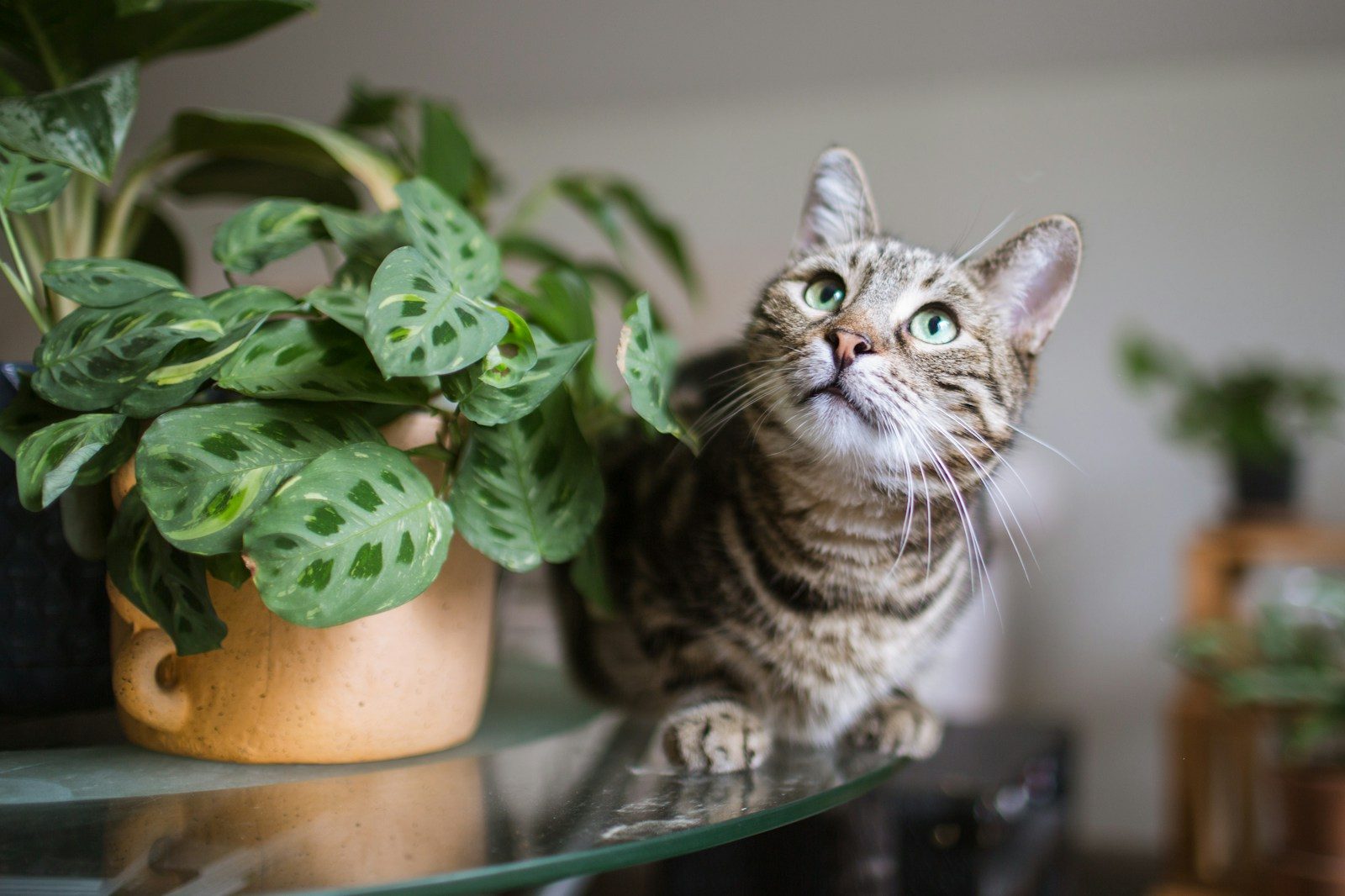
Quick answer: The best houseplants safe for cats include the spider plant, Boston fern, parlor palm, areca palm, ponytail palm, cast iron plant, calathea, peperomia, hoya, moth orchid, African violet, Christmas cactus and haworthia. All 24 plants below are listed as non-toxic to cats by the ASPCA Animal Poison Control Center. The ones to keep out of a cat home are true lilies and sago palms, which can be deadly, plus common plants like pothos, snake plant, peace lily, monstera, aloe vera and jade.
Cats and houseplants have a complicated relationship. Most cats will chew, bat or dig in a plant at some point, and many of the most popular houseplants are toxic to them. The good news is that you don’t have to choose between a green home and a safe cat. Plenty of beautiful, easy plants are completely cat-friendly.
We checked every plant in this guide against the ASPCA’s toxic and non-toxic plant database, the most widely used reference for pet owners in the US. Use the first table as your shopping shortlist and the second as your “do not buy” list.
In this guide: 24 cat-safe houseplants · Best picks by need · Plants toxic to cats · The two most dangerous · Tips for plants and cats · If your cat eats a plant · FAQ
24 Houseplants Safe for Cats
Every plant here is listed as non-toxic to cats by the ASPCA. Remember that non-toxic doesn’t mean edible: a cat that eats a lot of any plant can still vomit or get an upset stomach. Check the label for pesticides and fertilizers too, which can be harmful even on a safe plant.
| Plant | Why it’s a good pick | Light |
|---|---|---|
| 1. Spider plant Chlorophytum comosum | Nearly unkillable; arching striped leaves for shelves and hanging baskets | Bright, indirect |
| 2. Boston fern Nephrolepis exaltata | Lush cascading fronds; loves bathroom humidity | Bright, indirect |
| 3. Parlor palm Chamaedorea elegans | Soft, leafy floor plant for shady rooms | Low to medium |
| 4. Areca palm Dypsis lutescens | Tall feathery fronds that fill an empty corner | Bright, indirect |
| 5. Ponytail palm Beaucarnea recurvata | Sculptural swollen trunk; needs little water | Bright |
| 6. Cast iron plant Aspidistra elatior | Glossy dark leaves that survive dim corners and neglect | Low |
| 7. Calathea (incl. rattlesnake plant) Calathea spp. | Bold patterned leaves that fold up at night | Medium, indirect |
| 8. Polka dot plant Hypoestes phyllostachya | Pink- or white-speckled leaves for a pop of colour | Bright, indirect |
| 9. Baby rubber plant Peperomia obtusifolia | Thick glossy leaves; a cat-safe stand-in for a rubber plant | Medium |
| 10. Watermelon peperomia Peperomia argyreia | Compact, with silver-striped leaves like a watermelon rind | Medium |
| 11. Friendship plant Pilea involucrata | Textured, quilted leaves; great for terrariums | Medium |
| 12. Swedish ivy Plectranthus australis | Fast-growing trailing vines; a safe swap for pothos | Bright, indirect |
| 13. Wax plant (hoya) Hoya carnosa | Waxy trailing vines with scented star-shaped flowers | Bright |
| 14. Lipstick plant Aeschynanthus | Trailing stems with red tube-shaped flowers | Bright, indirect |
| 15. Moth orchid Phalaenopsis | Elegant blooms that last for months | Bright, indirect |
| 16. African violet Saintpaulia spp. | Compact flowering plant for windowsills | Bright, indirect |
| 17. Christmas cactus Schlumbergera bridgesii | Holiday flowers without the worry | Bright, indirect |
| 18. Haworthia (incl. zebra plant) Haworthia spp. | Small striped succulent; a safe lookalike for aloe and snake plants | Bright |
| 19. Hens and chickens Echeveria elegans | Rosette succulent for sunny sills | Bright to direct |
| 20. Burro’s tail Sedum morganianum | Trailing succulent with bead-like leaves | Bright to direct |
| 21. Money tree Pachira aquatica | Braided trunk and big hand-shaped leaves | Bright, indirect |
| 22. Banana plant Musa | Huge paddle leaves for a jungle look | Bright to direct |
| 23. Venus flytrap Dionaea muscipula | A fun carnivorous plant for a sunny spot | Bright to direct |
| 24. Basil Ocimum basilicum | A useful kitchen herb that’s safe around cats | Bright to direct |
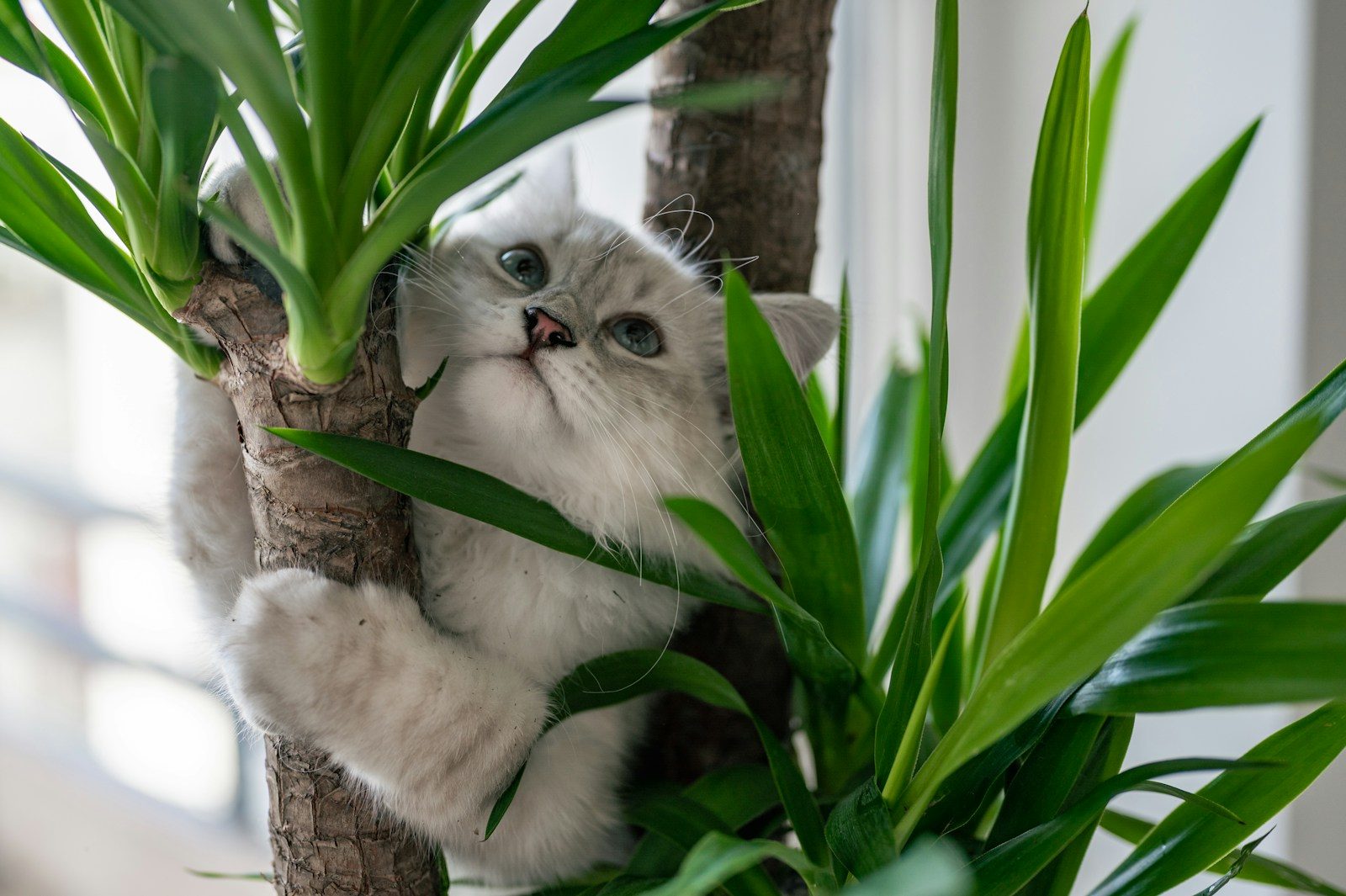
Best Cat-Safe Plants by Need
Low light
Cast iron plant, parlor palm and calathea cope with shady rooms and north-facing windows. The cast iron plant is the toughest of the three; calatheas want more humidity.
Hanging and trailing plants
Spider plant, Boston fern, Swedish ivy, hoya, lipstick plant and burro’s tail all trail beautifully, and hanging them keeps them away from paws (although stems within reach will still get batted). They’re the best cat-safe swaps for pothos. For a no-maintenance option, see our ideas for decorating with artificial hanging plants.
Big statement plants
Areca palm, money tree, ponytail palm and banana plant give you the tall, tropical look of a monstera or fiddle-leaf fig without the risk.
Flowering plants
Moth orchid, African violet, Christmas cactus and lipstick plant add colour. They’re a safer choice than a peace lily, and far safer than any true lily.
Succulents
Many succulents are toxic, including aloe vera, jade plant and kalanchoe. Haworthia, hens and chickens (echeveria) and burro’s tail are cat-safe options, and zebra haworthia is a great lookalike for a snake plant or aloe.
Easy plants for beginners
If you’ve never kept plants alive before, start with a spider plant, cast iron plant, ponytail palm or baby rubber plant. All four forgive missed waterings.
Houseplants Toxic to Cats: What to Avoid
These popular plants are listed as toxic to cats by the ASPCA. Many cause mild to moderate symptoms, but a few can be life-threatening. Follow the links for our full guides.
| Plant | Main signs in cats |
|---|---|
| True lilies and daylilies Lilium, Hemerocallis | Acute kidney failure, even from pollen or vase water. Emergency. |
| Sago palm Cycas revoluta | Vomiting, liver damage and liver failure; can be fatal. Emergency. |
| Snake plant Dracaena trifasciata | Nausea, vomiting, diarrhea |
| Pothos Epipremnum aureum | Mouth pain, drooling, vomiting |
| Peace lily Spathiphyllum | Mouth pain, drooling, vomiting |
| Monstera Monstera deliciosa | Mouth pain, drooling, vomiting |
| Philodendron Philodendron spp. | Mouth pain, drooling, vomiting |
| Dieffenbachia (dumb cane) Dieffenbachia | Mouth pain, drooling, vomiting |
| Aloe vera Aloe vera | Vomiting, lethargy, diarrhea |
| Jade plant Crassula | Vomiting, depression, incoordination |
| Dracaena (corn plant, dragon tree) Dracaena spp. | Vomiting, drooling, dilated pupils |
| English ivy Hedera helix | Vomiting, abdominal pain, drooling, diarrhea |
| Ficus (weeping fig and relatives) Ficus spp. | Mouth and stomach irritation, skin irritation |
| Kalanchoe Kalanchoe spp. | Vomiting, diarrhea; rarely heart rhythm problems |
| Cyclamen Cyclamen spp. | Drooling, vomiting, diarrhea |
| Tulip Tulipa spp. | Vomiting, drooling, diarrhea (bulbs are worst) |
The Two Most Dangerous Plants for Cats
True lilies (Lilium and Hemerocallis): Easter, tiger, Asiatic, Oriental, stargazer and daylilies can cause acute kidney failure in cats. Pet Poison Helpline warns that any amount of leaf, flower, pollen or even vase water is dangerous. Never bring them into a home with cats, and check bouquets before you accept them.
Sago palm (Cycas revoluta): every part is toxic, especially the seeds. The ASPCA lists liver damage, liver failure and death among its effects. If your cat chews either plant, go to a vet immediately, even if your cat seems fine.
Tips for Keeping Houseplants With Cats
- Check before you buy. Look up the plant’s botanical name, not just the common name. Names like “lily”, “palm” and “ivy” cover both safe and toxic plants.
- Watch out for gifts and bouquets. Flower arrangements often include lilies, and gift plants are often mislabelled.
- Hang plants or use high, hard-to-reach shelves, and keep trailing stems trimmed above jumping height.
- Offer cat grass. A pot of wheat or oat grass gives your cat something it’s allowed to chew.
- Cover the soil with large pebbles to stop digging and litter-box behaviour.
- Keep toxic plants in a cat-free room, or rehome them if your cat is a determined chewer.
- Pick up fallen leaves and flowers quickly, and keep plant food, pesticides and cuttings out of reach.
- Consider faux plants for spots where a real plant would be too tempting.
What to Do If Your Cat Eats a Toxic Plant
- Remove any plant pieces from your cat’s mouth if you can do so safely.
- Identify the plant, or take a photo or a leaf with you.
- Call your vet, the ASPCA Animal Poison Control Center at (888) 426-4435 or Pet Poison Helpline at (855) 764-7661 (US; a consultation fee may apply).
- Don’t make your cat vomit or give home remedies unless a vet tells you to.
- Go to an emergency vet straight away for any lily or sago palm exposure, or if your cat has trouble breathing, collapses or has a seizure.
Cat-Safe Houseplants: FAQ
What is the safest houseplant for cats?
The spider plant is one of the safest and easiest. It’s listed as non-toxic to cats by the ASPCA and is very hard to kill. Cats often like to nibble it, so expect a little leaf damage, and an occasional upset stomach if your cat eats a lot.
Are succulents safe for cats?
Some are and some aren’t. Haworthia, echeveria (hens and chickens), burro’s tail and Christmas cactus are listed as non-toxic, while aloe vera, jade plant and kalanchoe are toxic. Check each one individually.
Are palms safe for cats?
Most popular indoor palms are, including the parlor palm and areca palm, plus the ponytail palm (which isn’t a true palm). The big exception is the sago palm, which also isn’t a true palm and is extremely toxic.
Why do cats love spider plants?
Spider plants aren’t toxic, but many cats are strongly drawn to their grass-like leaves, and some owners say their cats act playful after chewing them. Eating a lot can cause vomiting, so don’t let your cat graze on one freely.
Is it safe to have toxic plants if my cat ignores them?
It’s a risk you can manage, but cats’ habits can change, especially when they’re bored or young. Keep toxic plants out of reach or in a closed room, and never keep true lilies or sago palms in a home with cats.
Are herbs safe for cats?
Basil is listed as non-toxic, and cat grass and catnip are classic cat-safe choices. Some herbs, such as chives and other alliums, are toxic, so check each one.
Where can I check if a plant is safe for cats?
The ASPCA Animal Poison Control Center has a searchable list of toxic and non-toxic plants. Search by the plant’s botanical name for the most accurate result.
The Bottom Line
You can absolutely have a green home with a cat. Build it around cat-safe favourites like spider plants, ferns, palms, calatheas, peperomias, hoyas, orchids and haworthias, keep the toxic ones out of reach or out of the house, and never bring home true lilies or sago palms. When in doubt, check the ASPCA list before you buy.
Sources: toxicity listings from the ASPCA Animal Poison Control Center. Non-toxic: spider plant, boston fern, parlor palm, areca palm, ponytail palm, cast iron plant, calathea, polka dot plant, baby rubber plant, watermelon peperomia, friendship plant, swedish ivy, wax plant, lipstick plant, moth orchid, african violet, christmas cactus, haworthia, hens and chickens, burro’s tail, money tree, banana plant, venus flytrap, basil. Toxic: true lilies and daylilies, sago palm, snake plant, pothos, peace lily, monstera, philodendron, dieffenbachia, aloe vera, jade plant, dracaena, english ivy, ficus, kalanchoe, cyclamen, tulip. Lily warning: Pet Poison Helpline: Lilies. This article is for general information and is not a substitute for veterinary advice. If you think your pet has been poisoned, contact your vet or an animal poison control service straight away. See our disclaimer.