

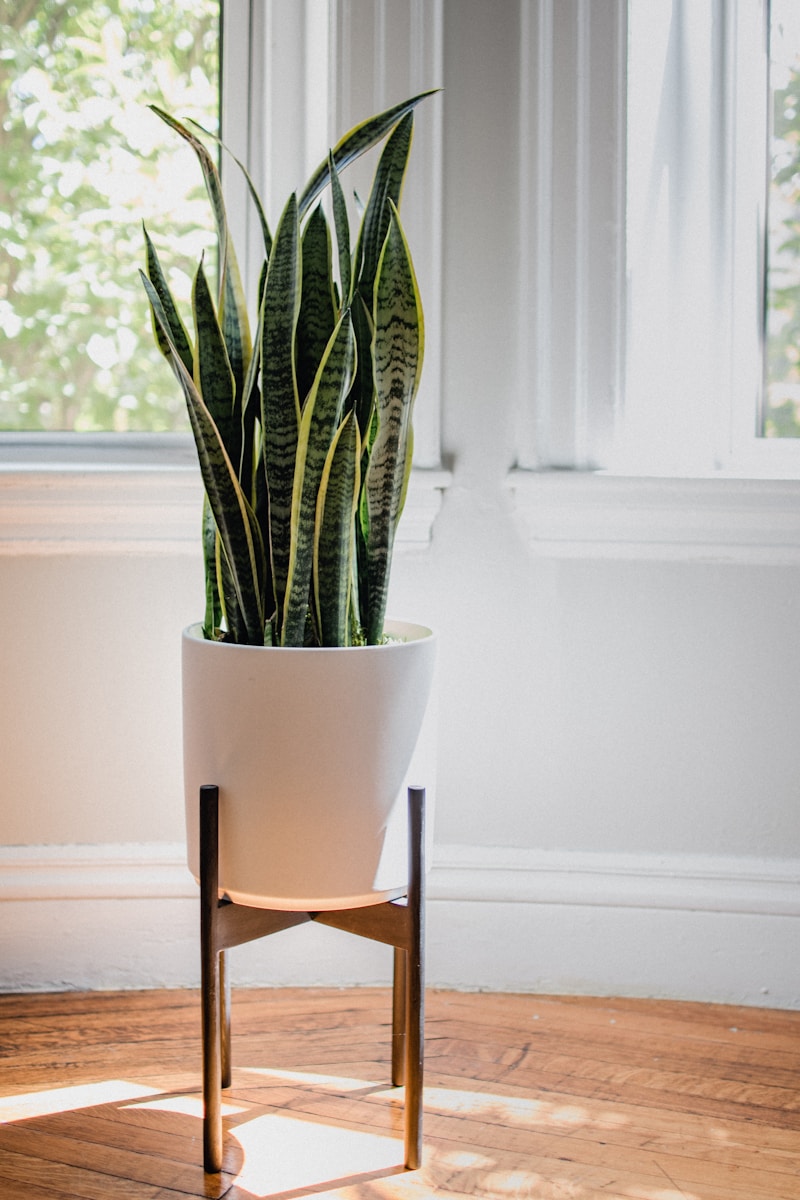
Quick answer: Yes, snake plants are toxic to cats. The ASPCA lists the snake plant (Sansevieria trifasciata, also sold as mother-in-law’s tongue or Dracaena trifasciata) as toxic to cats because its leaves contain saponins. Chewing them usually causes drooling, nausea, vomiting or diarrhea, and Pet Poison Helpline notes that cats may also show dilated pupils and a wobbly walk. It is rarely life-threatening, but if your cat has eaten any snake plant, call your vet or a pet poison hotline for advice.
Snake plants sit near the top of every “easy houseplants” list. They cope with dim corners, irregular watering and dry air, which is exactly why so many cat owners end up with one. The trouble is that cats are natural plant nibblers, and a snake plant’s stiff, pointed leaves are just the kind of thing a curious cat likes to bite.
This guide covers why snake plants are harmful to cats, the signs to watch for, what to do if your cat takes a bite, how to keep a snake plant safely in a cat household, and the best cat-safe plants that give you the same look.
In this guide: Why cats chew plants · Why snake plants are toxic · Symptoms · How serious is it? · My cat ate a snake plant · Keeping both · Cat-safe alternatives · FAQ
Why Do Cats Chew Snake Plants?
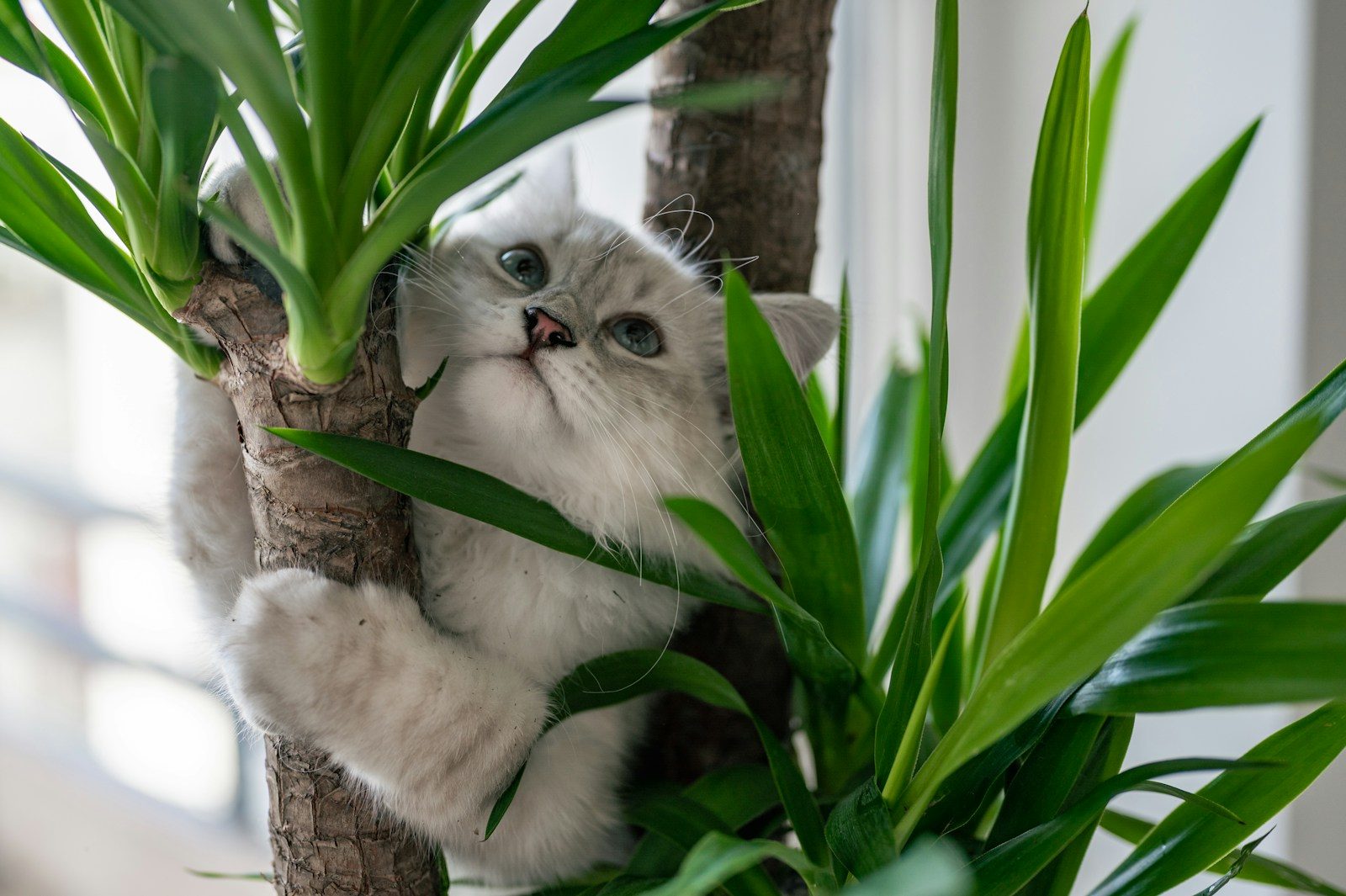
Cats are carnivores, yet many of them love chewing greenery. Vets don’t fully agree on why, but the most common explanations are:
- Instinct. Wild cats eat grass and plant material, possibly to help move fur and other indigestible matter through the gut.
- Texture. Firm, grass-like leaves are satisfying to bite, and the upright blades of a snake plant look a lot like a clump of grass.
- Play and boredom. Indoor cats, especially young ones, often treat moving or dangling leaves as toys.
- Attention. Some cats learn that chewing a plant gets an instant reaction from their owner.
Unlike dogs, cats can climb and jump onto almost any surface, so “just put it up high” rarely works on its own. That makes it more important for cat owners to know the risks and choose plants carefully.
Why Are Snake Plants Toxic to Cats?
The problem is a group of natural compounds called saponins. Many plants make saponins as a defence against insects and grazing animals. They taste bitter and soapy, and when swallowed they irritate the lining of the mouth, stomach and intestines.
Saponins are found in the leaves and stems, so any part of the plant your cat chews can cause symptoms. The amount in a single nibble is small, and the bitter taste puts most cats off quickly. That is why most cases are mild. But cats are small animals, so it doesn’t take much plant material to upset their stomach.
The same warning applies to every type of snake plant, including ‘Laurentii’ with its yellow edges, silvery ‘Moonshine’, the short bird’s nest ‘Hahnii’ and the cylindrical snake plant (Sansevieria cylindrica, now Dracaena angolensis).
Symptoms of Snake Plant Poisoning in Cats
The ASPCA lists nausea, vomiting and diarrhea as the main signs. Pet Poison Helpline adds drooling and, in cats specifically, dilated pupils and an unsteady, wobbly gait. Symptoms usually start within a few hours of chewing the plant. Look for:
- Drooling or foaming at the mouth, often the first sign, along with pawing at the mouth or head shaking
- Nausea: lip licking, swallowing repeatedly, crouching or hiding
- Vomiting, sometimes with bits of green leaf
- Diarrhea or soft stools in the litter box
- Dilated pupils
- Wobbliness or an unsteady walk
- Refusing food or seeming quiet and withdrawn
Cats are experts at hiding when they feel unwell, so a cat that suddenly disappears under the bed after chewing a plant deserves a closer look. Call a vet straight away if your cat vomits repeatedly, stops eating or drinking, has blood in its vomit or stool, has trouble breathing, or seems very weak. Those signs are not typical of snake plant poisoning and may mean something more serious is going on.
How Serious Is Snake Plant Poisoning for Cats?
In most cases it is mild and short-lived. A cat that takes a bite or two may drool or vomit once and then recover without treatment. Serious poisoning is uncommon. The risk goes up when:
- Your cat ate a lot, for example a whole leaf or repeated chewing over several days.
- Your cat is a kitten, a senior or already unwell. Cats with kidney disease, diabetes or other conditions dehydrate more easily, and repeated vomiting or diarrhea can quickly make them worse.
- Something else was involved, such as fertilizer, pesticide or leaf-shine spray on the plant, or potting mix your cat dug up and ate.
Don’t confuse snake plants with lilies. True lilies (Lilium, such as Easter, tiger and Asiatic lilies) and daylilies (Hemerocallis) are far more dangerous to cats. Even a small amount of leaf, flower, pollen or vase water can cause kidney failure. If your cat has touched or chewed a lily, treat it as an emergency and go to a vet immediately.
My Cat Ate a Snake Plant: What Should I Do?
- Move your cat away from the plant and put the plant somewhere your cat can’t reach. If there are leaf pieces in its mouth and your cat lets you, gently remove them.
- Check what was eaten. Look for chewed tips or missing leaves and note roughly when it happened. Check the floor for vomit or leaf pieces too.
- Call your vet or a pet poison hotline. In the US, call the ASPCA Animal Poison Control Center at (888) 426-4435 or Pet Poison Helpline at (855) 764-7661. Both are open 24/7 and may charge a consultation fee. Outside the US, call your vet or local emergency animal clinic.
- Never try to make your cat vomit at home. Hydrogen peroxide, salt and other home remedies are not safe for cats and can cause serious harm to the stomach and throat.
- Keep fresh water nearby and watch your cat for the next 24 hours. Note any vomiting, diarrhea, hiding or changes in appetite to tell your vet.
- Bring a photo or a leaf if you go to the clinic, so the vet can confirm the plant.
If treatment is needed, it is usually supportive: anti-nausea medicine, fluids to prevent dehydration and a bland diet for a day or so. Most cats make a full recovery.
Can You Keep a Snake Plant If You Have a Cat?
Plenty of cat owners do, but it takes more planning than it does with a dog, because a shelf that is “out of reach” for a dog is often a favourite lookout spot for a cat. These ideas help:
- Use a cat-free room. A home office, guest room or bathroom with the door kept closed is the most reliable option. Snake plants are happy in lower light, so they suit rooms that other plants wouldn’t.
- Grow it behind glass. A glass cabinet or a large closed terrarium near a window keeps the plant visible but untouchable.
- Make the pot uninviting. Cover the soil with large pebbles so it isn’t used as a litter box, and stand the pot where there is no nearby furniture to jump from.
- Try deterrents. Many cats dislike citrus scents, double-sided tape and kitchen foil. A strip around the base of the pot or the shelf edge can discourage visits. Never spray essential oils near cats, as many are toxic to them.
- Offer something better to chew. A pot of cat grass (usually wheat, oat or barley grass) gives your cat a safe option and often draws attention away from houseplants.
- Keep your cat entertained. Daily play, climbing spaces and puzzle feeders reduce boredom chewing.
- Pick up fallen leaves and trimmings straight away.
If you have a kitten or a cat that keeps going back to the plant despite your efforts, the simplest and safest answer is to rehome the snake plant and choose a cat-safe alternative instead.
Cat-Safe Alternatives to Snake Plants
These plants are listed as non-toxic to cats by the ASPCA and offer a similar easy-care, structured look:
| Plant | Why it’s a good swap | Light |
|---|---|---|
| Zebra haworthia (Haworthia fasciata) | Looks like a mini snake plant, with striped, pointed succulent leaves | Bright, some direct sun |
| Cast iron plant (Aspidistra elatior) | Just as tough as a snake plant and happy in dim corners | Low to medium |
| Ponytail palm (Beaucarnea recurvata) | Sculptural, upright and drought-tolerant | Bright |
| Parlor palm (Chamaedorea elegans) | Soft fronds for a floor-standing tropical look | Low to medium |
| Prayer plant and calathea (Maranta, Calathea) | Striking patterned leaves, including the stripy rattlesnake plant | Medium, indirect |
| Boston fern (Nephrolepis exaltata) | Lush and full, ideal for a hanging basket | Bright, indirect, humid |
| Spider plant (Chlorophytum comosum) | Very easy to grow, though many cats love to chew the arching leaves, so hang it up | Bright, indirect |
“Non-toxic” means the plant isn’t poisonous, but any plant can upset a cat’s stomach if eaten in quantity, so it’s still worth discouraging chewing. You can check any plant before buying in the ASPCA list of toxic and non-toxic plants for cats.
Several other popular houseplants are also toxic to cats, including pothos, peace lilies, monstera, aloe vera and dracaena. Check before you bring a new plant home. And if you want greenery with no risk at all, good-quality faux plants are worth a look; see our ideas for decorating with artificial hanging plants.
Frequently Asked Questions
Can a snake plant kill a cat?
It is very unlikely. Snake plant poisoning usually causes stomach upset rather than organ damage, and the bitter taste stops most cats from eating much. Repeated vomiting can still lead to dehydration, especially in kittens, older cats and cats with health problems, so always get advice from a vet.
How much snake plant is toxic to a cat?
There is no known safe amount. A single bite can cause drooling or vomiting in some cats, while others show no signs. Because it depends on your cat’s size and health, treat any amount as a reason to call your vet or a pet poison hotline.
How long after eating a snake plant will my cat show symptoms?
Drooling can start within minutes, and vomiting or diarrhea usually appear within a few hours. Mild cases often settle within 24 hours. If symptoms last longer or get worse, contact your vet.
Is it safe to have a snake plant in the house with a cat?
Having one in the house isn’t dangerous in itself; the risk comes from chewing. Sniffing or brushing against the leaves isn’t considered harmful. If your cat can’t get to the plant, for example in a closed room or a glass cabinet, it is safe to keep.
Are cylindrical snake plants and ‘Laurentii’ also toxic to cats?
Yes. All snake plant varieties belong to the same group and contain saponins, so treat them all as toxic to cats.
Why does my cat keep eating my snake plant?
Usually because it looks and feels like grass, or out of boredom. Offering cat grass, more playtime and moving the plant to a cat-free room usually solves the habit. If your cat chews plants obsessively, mention it to your vet, as it can occasionally be linked to diet or other health issues.
Are snake plants toxic to dogs as well?
Yes, with the same saponin-related symptoms. Read our full guide: Are snake plants toxic to dogs?
The Bottom Line
Snake plants are toxic to cats, but poisoning is usually mild. Because cats can reach almost any shelf, the safest way to keep one is in a room your cat can’t enter, or behind glass. If your cat does take a bite, don’t try home remedies: call your vet or a pet poison hotline. And if you’d rather not worry at all, swap in a cat-safe lookalike such as zebra haworthia, a cast iron plant or a ponytail palm, and add a pot of cat grass for your cat to enjoy.
Sources: ASPCA Animal Poison Control: Snake Plant; Pet Poison Helpline: Sansevieria; ASPCA: Zebra Haworthia. This article is for general information and is not a substitute for veterinary advice. If you think your pet has been poisoned, contact your vet or an animal poison control service straight away. See our disclaimer.