

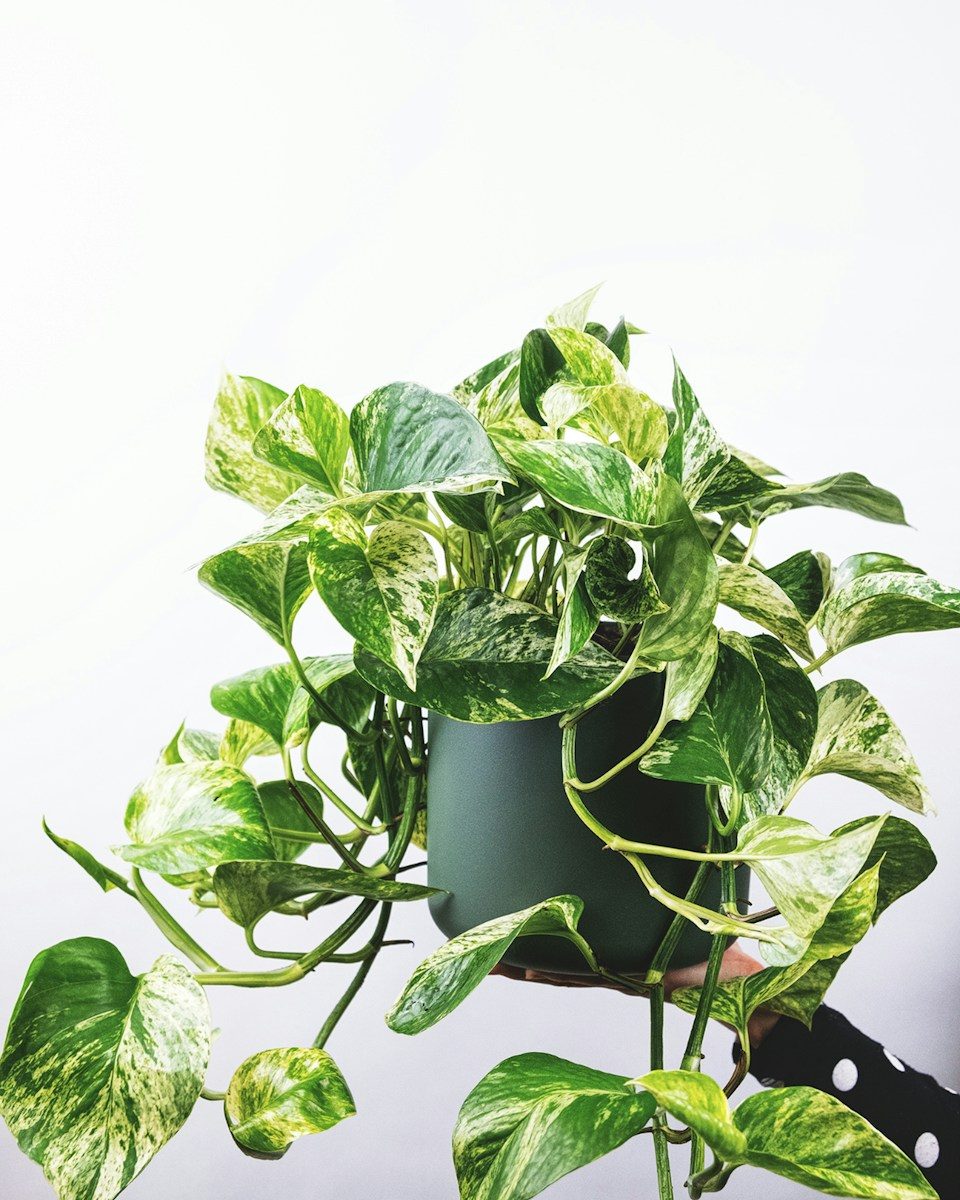
Quick answer: Yes, pothos is toxic to cats. The ASPCA lists pothos (Epipremnum aureum, also called golden pothos or devil’s ivy) as toxic to cats and dogs because its leaves and stems contain insoluble calcium oxalate crystals. When a cat bites the plant, the crystals cause intense burning and irritation in the mouth, tongue and lips, followed by drooling, vomiting and difficulty swallowing. It is rarely fatal, but if your cat has chewed pothos, call your vet or a pet poison hotline, and go straight to an emergency vet if your cat has any trouble breathing.
Pothos might be the most popular houseplant in the world. It grows in low light, forgives missed waterings and trails beautifully from shelves and hanging baskets. Those long, dangling vines are also exactly what a cat wants to bat, pull and bite, which is why pothos is one of the plants pet poison hotlines hear about most often.
This guide explains why pothos hurts cats, the symptoms to watch for, what to do if your cat chews a leaf, whether it is safe to keep pothos in a cat household at all, and the best cat-safe trailing plants to grow instead.
In this guide: Why pothos is toxic · Which varieties · Symptoms · How serious is it? · My cat ate pothos · Keeping pothos with a cat · Cat-safe alternatives · FAQ
Why Is Pothos Toxic to Cats?
Pothos belongs to the arum family (Araceae), along with philodendron, monstera, peace lily and dieffenbachia. Plants in this family protect themselves with microscopic, needle-shaped crystals of calcium oxalate, packed into special cells in the leaves and stems.
When a cat bites into the plant, those cells burst and fire the crystals into the soft tissue of the mouth. The effect is immediate: sharp, burning pain on the lips, tongue and gums, and sometimes in the throat. Pet Poison Helpline describes it as irritation and pain to the lips, mouth and throat, with drooling, gagging and vomiting as the most common signs.
The word “insoluble” matters here. These crystals don’t dissolve and get absorbed into the body the way some plant toxins do, so pothos doesn’t usually damage organs such as the kidneys. The harm is mostly mechanical irritation where the crystals touch. That is also why most cats stop after one bite: the plant hurts to chew.
Every part of the plant contains the crystals, including leaves, stems, aerial roots and cuttings sitting in a jar of water. Some owners also worry about cats drinking that water; it is not known to be dangerous in the same way, but it can contain plant sap and fertilizer, so keep propagation jars out of reach too.
Are All Types of Pothos Toxic to Cats?
Yes. Popular names like golden pothos, marble queen, neon, ‘N’Joy’, ‘Pearls and Jade’, ‘Manjula’ and ‘Global Green’ are all cultivars of the same species, Epipremnum aureum, so they share the same calcium oxalate crystals. Colour and variegation make no difference.
Two common “pothos” are technically different plants:
- Satin or silver pothos (Scindapsus pictus) is a close relative in the same arum family. It also contains calcium oxalates, so treat it as toxic to cats.
- Heartleaf philodendron (Philodendron hederaceum) is often sold next to pothos and looks almost identical. The ASPCA lists it as toxic to cats for the same reason.
If a trailing plant has glossy, heart-shaped leaves and you’re not sure what it is, assume it is an aroid and keep it away from your cat until you’ve identified it.
Symptoms of Pothos Poisoning in Cats
Because the crystals act on contact, symptoms usually begin within minutes of chewing, much faster than many other plant poisonings. The ASPCA lists oral irritation, intense burning of the mouth, tongue and lips, excessive drooling, vomiting and difficulty swallowing. Look for:
- Sudden heavy drooling or foaming at the mouth
- Pawing at the mouth, head shaking or rubbing the face on the floor
- Crying, hiding or other signs of pain
- Vomiting or gagging, sometimes with bits of leaf
- Trouble swallowing and refusing food or water
- Red, swollen lips, tongue or gums
- Noisy or laboured breathing, which is rare but an emergency
You may also find clues before you notice symptoms: chewed or torn leaves, leaf fragments on the floor, or green-flecked vomit.
How Dangerous Is Pothos for Cats?
For most cats, pothos poisoning is painful but mild to moderate. The burning sensation usually stops a cat after a bite or two, so they rarely swallow much, and the symptoms tend to ease over several hours with supportive care. Pothos is not known for causing the organ damage that makes some plants deadly.
The exception is swelling. Pet Poison Helpline notes that, in rare cases, severe swelling of the throat can make breathing difficult. Cats that chew a large amount, kittens, and cats with existing breathing problems are most at risk. Any change in breathing means an immediate trip to the vet.
Don’t confuse pothos with lilies. Pothos mostly causes mouth pain. True lilies (Lilium and Hemerocallis, such as Easter, tiger and day lilies) are far more dangerous: even a little pollen or a sip of vase water can cause kidney failure in cats. If you think your cat has touched any true lily, treat it as an emergency.
What to Do If Your Cat Ate Pothos
Stay calm. Most cats recover well, and quick, simple steps make a big difference:
- Move your cat away from the plant and gently remove any leaf pieces from its mouth if you can do so safely.
- Check the breathing. If your cat is struggling to breathe, wheezing or its face is swelling, go to the nearest emergency vet now.
- Offer water or a little wet food. This can help rinse crystals from the mouth. Don’t force it if your cat won’t eat or drink.
- Call for advice. Ring your vet, the ASPCA Animal Poison Control Center at (888) 426-4435 or Pet Poison Helpline at (855) 764-7661 (US; a consultation fee may apply).
- Don’t make your cat vomit and don’t give salt, hydrogen peroxide or home remedies unless a vet tells you to. Inducing vomiting isn’t recommended for this kind of plant and can irritate the mouth and throat all over again.
- Take a photo of the plant or bring a leaf with you, so the vet knows exactly what your cat ate.
At the clinic, treatment is usually supportive: rinsing the mouth, anti-nausea medication, pain relief and, if needed, anti-inflammatory drugs or fluids. Most cats are back to normal within a day.

Can You Keep Pothos If You Have a Cat?
You can, but it takes more planning than most plants, because pothos vines grow long and cats can climb almost anywhere. If your cat is a known plant chewer or you have a kitten, the simplest answer is to give your pothos away or swap it for a cat-safe plant. Otherwise, these steps lower the risk:
- Grow it in a cat-free room. A home office or bathroom with the door kept closed is the most reliable option.
- Hang it from the ceiling, not a shelf. A ceiling hook away from furniture is much harder for a cat to reach than a bookcase, which is basically a staircase.
- Keep the vines trimmed. Dangling tendrils are an invitation to play. Trim them so they stay well above jumping height, and pick up fallen leaves.
- Train it upwards. A moss pole or indoor trellis keeps growth compact and vertical instead of trailing.
- Use a glass cabinet or terrarium for smaller plants.
- Give your cat something better to chew. A pot of cat grass (wheat or oat grass) satisfies the urge to nibble greens.
- Keep cuttings and propagation jars out of reach and dispose of trimmings straight away.
Bitter sprays and citrus deterrents help with some cats but aren’t reliable on their own. And if you love the trailing look but don’t want any risk, good-quality artificial hanging plants give you the same effect with nothing to chew.
Cat-Safe Alternatives to Pothos
These plants are listed as non-toxic to cats by the ASPCA and give a similar trailing or leafy look. Non-toxic doesn’t mean edible: a cat that eats lots of any plant may still get a mild upset stomach.
| Plant | Why it works instead of pothos | Care |
|---|---|---|
| Spider plant (Chlorophytum comosum) | Arching striped leaves and baby plantlets that trail from hanging baskets | Easy; bright indirect light |
| Swedish ivy (Plectranthus australis) | Fast-growing trailing vines with round, glossy leaves | Easy; bright indirect light, keep evenly moist |
| Wax plant / hoya (Hoya carnosa) | Waxy trailing vines with clusters of scented star-shaped flowers | Easy; bright light, let soil dry between waterings |
| Boston fern (Nephrolepis exaltata) | Lush, cascading fronds for hanging baskets | Moderate; likes humidity |
Some plants often suggested as pothos swaps are not cat-safe, including philodendron, monstera, arrowhead plant (syngonium), English ivy and, as covered in our guide, snake plants. Always check a plant’s name against the ASPCA list before you buy.
Pothos and Cats: FAQ
Can pothos kill a cat?
It is very unlikely. Pothos causes painful mouth irritation, drooling and vomiting, and most cats recover fully with simple supportive care. The rare serious risk is throat swelling that affects breathing, which needs emergency treatment.
How long after eating pothos will a cat show symptoms?
Usually within minutes, because the crystals irritate the mouth on contact. Drooling and pawing at the mouth are typically the first signs.
How long does pothos poisoning last in cats?
Most cats improve within a few hours and are back to normal within about a day. If symptoms are getting worse or last longer, see your vet.
Is it safe to just touch or smell pothos?
Yes. The crystals are released when the plant is chewed or broken, so brushing past or sniffing the leaves isn’t considered harmful. Sap from a broken stem can irritate skin, so wash it off your cat’s fur if it gets on it.
Are neon and marble queen pothos safe for cats?
No. They’re varieties of the same species as golden pothos and are equally toxic.
Why does my cat keep chewing my pothos?
Moving vines look like toys, and many cats simply like chewing greenery. Trimming the vines, moving the plant to a cat-free room, more playtime and a pot of cat grass usually break the habit.
What hanging plants are safe for cats?
Spider plants, Swedish ivy, hoyas and Boston ferns are all listed as non-toxic to cats by the ASPCA and look great in hanging baskets.
Is pothos toxic to dogs too?
Yes. The ASPCA lists pothos as toxic to dogs as well, with the same mouth pain, drooling and vomiting. Dogs tend to chew more of a plant at once, so keep it out of reach of both. For another common houseplant, see are snake plants toxic to dogs?
The Bottom Line
Pothos is toxic to cats. Its calcium oxalate crystals cause instant mouth pain, drooling and vomiting, although serious poisoning is rare. If your cat chews pothos, rinse its mouth with water or food, watch its breathing and call your vet or a pet poison hotline. If you’d rather not take the risk, keep pothos in a room your cat can’t reach, or swap it for a cat-safe trailing plant like a spider plant, Swedish ivy or hoya.
Sources: ASPCA Animal Poison Control: Golden Pothos; Pet Poison Helpline: Devil’s Ivy; ASPCA plant pages for heartleaf philodendron, spider plant, Swedish ivy, wax plant and Boston fern. This article is for general information and is not a substitute for veterinary advice. If you think your pet has been poisoned, contact your vet or an animal poison control service straight away. See our disclaimer.