

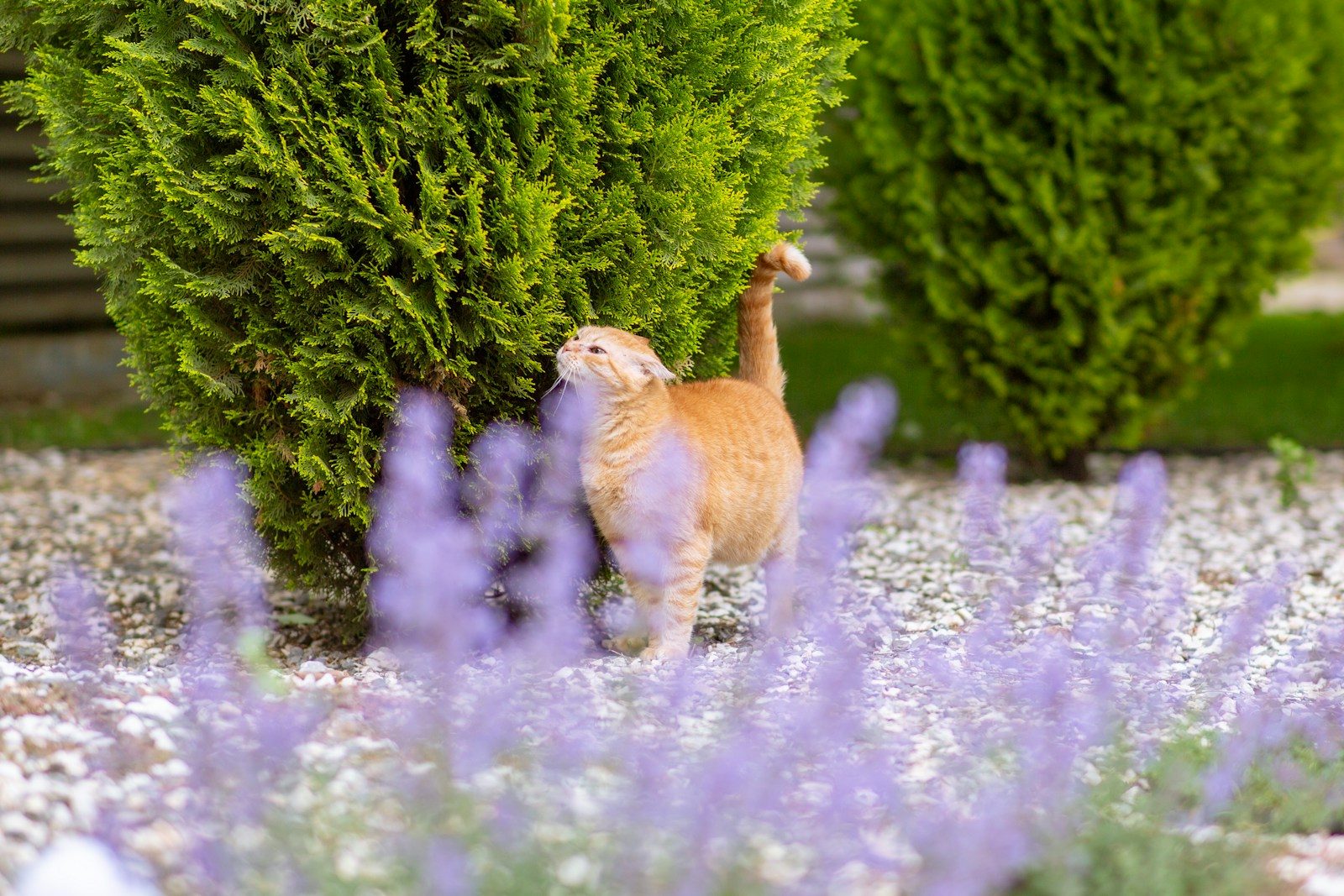
Quick answer: No, lavender isn’t safe for cats. The ASPCA lists lavender (Lavandula angustifolia) as toxic to cats, dogs and horses because it contains linalool and linalyl acetate. A cat that chews the plant usually gets a mild upset stomach, with nausea, vomiting or loss of appetite. The bigger risk is concentrated lavender essential oil: Pet Poison Helpline explains that cats lack a liver enzyme needed to break down many essential oil compounds. Keep lavender plants out of reach, never put lavender oil on your cat, and call your vet or a pet poison hotline if your cat eats lavender or gets oil on its fur.
Lavender is everywhere: in gardens and window boxes, dried bundles, pillow sprays, candles, laundry detergent and essential oil diffusers. It’s known for its calming scent, so many cat owners are surprised to learn it’s on the ASPCA’s list of toxic plants.
The good news is that the risk depends a lot on the form. A nibble of a lavender plant is rarely serious, while lavender oil needs much more care. This guide explains why lavender is harmful to cats, how risky each form is, the symptoms to watch for, what to do, and the cat-safe plants that give you a similar look or scent.
In this guide: Why lavender is toxic · Plant vs. oil vs. products · Symptoms · How serious is it? · If your cat eats lavender · Lavender oil and diffusers · Growing lavender with a cat · Cat-safe alternatives · FAQ
Why Is Lavender Toxic to Cats?
Lavender gets its scent from natural aromatic compounds, mainly linalool and linalyl acetate. The ASPCA lists these as the toxic principles in lavender. In the small amounts a cat might get from chewing a leaf or flower, they mostly irritate the stomach.
Cats are also more sensitive than people and dogs to many aromatic compounds. Pet Poison Helpline explains that cats lack an essential liver enzyme, so they have difficulty breaking down and eliminating certain toxins, including essential oils. That’s why the concentration matters so much: a sprig of lavender contains a tiny amount of these compounds, while a few drops of lavender essential oil contain a lot.
The ASPCA’s listing is for English or common lavender (Lavandula angustifolia). French, Spanish and hybrid lavenders (such as lavandin) contain the same family of aromatic compounds, so treat every type of lavender as unsafe for cats.
Lavender Plant vs. Oil vs. Products: How Risky Is Each?
| Form of lavender | Risk to cats | What to do |
|---|---|---|
| Fresh lavender plant (garden or pot) | Low to moderate. Chewing usually causes a mild upset stomach. | Keep it out of reach or in a cat-free area. |
| Dried lavender (bundles, sachets, potpourri) | Low to moderate. More concentrated than fresh, and sachets can be chewed open. | Keep it in closed drawers or high up. |
| Lavender essential oil | High. Concentrated oil can cause drooling, vomiting, wobbliness and breathing problems, especially if licked or absorbed through the skin. | Store it sealed and out of reach. Never apply it to your cat. |
| Oil diffusers | Moderate to high, depending on the type. Droplets can land on fur and get licked off. | Avoid them, or use them only in rooms your cat can leave. |
| Scented products (candles, sprays, lotions, detergent) | Usually low if used normally, but sprays and lotions on fur or bedding can be licked off. | Don’t spray near your cat or its bedding. Wash lotion off your hands before handling your cat. |
Symptoms of Lavender Poisoning in Cats
For the plant, the ASPCA lists nausea, vomiting and loss of appetite. You may also notice:
- Drooling or lip licking
- Vomiting, sometimes with bits of leaf or flower
- Refusing food or hiding
- Diarrhea or soft stools
With essential oil exposure, Pet Poison Helpline lists more serious warning signs: gagging, vomiting, drooling, difficulty breathing, wobbliness (ataxia), itching or rash and changes in behaviour. You may also smell lavender on your cat’s breath or fur.

How Dangerous Is Lavender for Cats?
The plant: usually mild. Most cats don’t eat much lavender, because the strong scent and taste put them off, and symptoms tend to be limited to a short-lived stomach upset. A cat that eats a lot, a kitten, or a cat with liver problems is more at risk.
Essential oil: potentially serious. Because cats struggle to break down essential oil compounds, oil that is licked, swallowed or absorbed through the skin can cause much stronger effects than the plant. Treat any oil exposure as a reason to call your vet straight away, even if your cat seems fine at first.
What to Do If Your Cat Eats Lavender
- Move your cat away from the plant or product and remove any pieces from its mouth if you can do so safely.
- If oil is on the fur or skin, wash the area gently with mild dish soap and water and dry your cat, so it doesn’t lick more off. Don’t use other oils or home remedies.
- Move your cat into fresh air if it was near a diffuser and is showing any breathing changes.
- Call for advice. Ring your vet, the ASPCA Animal Poison Control Center at (888) 426-4435 or Pet Poison Helpline at (855) 764-7661 (US; a consultation fee may apply).
- Don’t make your cat vomit unless a vet tells you to.
- Bring the product or plant (or a photo of the label) to the vet. Essential oil blends often contain other oils that are even more toxic.
Go to an emergency vet immediately if your cat has trouble breathing, is very wobbly, collapses or has a seizure.
Is Lavender Oil Safe to Diffuse Around Cats?
It’s best avoided. Pet Poison Helpline explains that passive diffusers (reed diffusers, plug-in warmers, candle burners) mainly cause breathing irritation in cats. Active ultrasonic and nebulizing diffusers release tiny droplets of oil that can settle on a cat’s fur, where they are licked off during grooming or absorbed through the skin. Cats with asthma are especially sensitive to anything in the air.
If you choose to use lavender oil anyway, follow Pet Poison Helpline’s precautions:
- Keep oils and diffusers where your cat can’t reach or knock them over.
- Only diffuse in a room your cat can easily leave, and never shut a cat in with a diffuser.
- Never leave a diffuser running unattended, and limit how long you use it.
- Never apply essential oils directly to your cat, and don’t use lavender “calming” products made for people on pets.
Can You Grow Lavender If You Have a Cat?
Yes, with some care. Lavender is a sun-loving outdoor plant, so a garden bed is usually safer than a windowsill, and many cats avoid its strong smell anyway. To lower the risk:
- Grow it outdoors rather than inside, especially if your cat is indoor-only and bored.
- Keep indoor pots out of reach, or in a room your cat can’t enter.
- Watch for chewing, especially in kittens and young cats, and remove the plant if your cat keeps nibbling it.
- Store dried lavender in closed drawers or containers.
- Offer cat grass so your cat has something it’s allowed to chew.
Cat-Safe Alternatives to Lavender
These plants are listed as non-toxic to cats by the ASPCA and give you fragrance, a herb-garden look or purple flowers. Non-toxic doesn’t mean edible, so a cat that eats a lot of any plant may still have a mild upset stomach.
| Plant | Why it works instead of lavender |
|---|---|
| Rosemary (Rosmarinus officinalis) | Fragrant, woody Mediterranean herb with small blue flowers and a similar look |
| Thyme (Thymus vulgaris) | Low, scented herb that loves the same sunny, dry spots as lavender |
| Garden sage (Salvia officinalis) | Soft grey-green leaves and purple-blue flowers |
| Lemon balm (Melissa officinalis) | Fresh lemony scent for pots and borders |
| African violet (Saintpaulia) | Purple flowers indoors on a bright windowsill |
What about catnip? Many cats love it, but the ASPCA notes that eating a lot can cause vomiting and diarrhea, so offer it in moderation. For many more options, see our full list of houseplants safe for cats.
Lavender and Cats: FAQ
Is it safe for cats to smell lavender?
Smelling a lavender plant or a bunch of dried flowers isn’t considered dangerous. The risk comes from eating the plant and, much more, from concentrated essential oil that’s licked, inhaled heavily in a closed room or absorbed through the skin.
Is dried lavender safe for cats?
No. Dried lavender contains the same compounds as the fresh plant, and they’re more concentrated. Keep sachets, bundles and potpourri where your cat can’t chew them.
Can lavender oil kill a cat?
Serious essential oil poisoning in cats is possible, especially if a cat swallows oil or gets a lot on its skin, which is why vets advise keeping oils away from cats entirely. If your cat has been exposed to lavender oil, call your vet or a pet poison hotline right away.
Do cats like the smell of lavender?
Most cats seem to dislike strong herbal and floral scents, so many avoid lavender. That doesn’t make it safe: curious cats and kittens may still chew it, and you shouldn’t use lavender oil as a cat deterrent.
Are French and Spanish lavender safe for cats?
No. All lavenders contain similar aromatic compounds, so treat every type as toxic to cats.
Is lavender toxic to dogs too?
Yes. The ASPCA lists lavender as toxic to dogs and horses as well, with nausea and vomiting. For another common plant, see are snake plants toxic to dogs?
More Plant Safety Guides for Cat Owners
- 24 houseplants safe for cats (and the ones to avoid)
- Are snake plants toxic to cats?
- Are pothos toxic to cats?
- Are peace lilies toxic to cats?
- Is monstera toxic to cats?
The Bottom Line
Lavender isn’t safe for cats. The ASPCA lists it as toxic because of linalool and linalyl acetate, and chewing the plant usually causes a mild stomach upset. Lavender essential oil is the bigger danger, because cats can’t break down essential oil compounds well. Grow lavender outdoors or out of reach, store dried lavender and oils safely, skip diffusers around your cat, and call your vet if your cat eats lavender or gets oil on its fur. For a safe herb garden, try rosemary, thyme or sage instead.
Sources: ASPCA Animal Poison Control: Lavender; Pet Poison Helpline: Essential Oils and Cats; ASPCA plant pages for catnip, rosemary, thyme, sage, lemon balm and African violet. This article is for general information and is not a substitute for veterinary advice. If you think your pet has been poisoned, contact your vet or an animal poison control service straight away. See our disclaimer.