

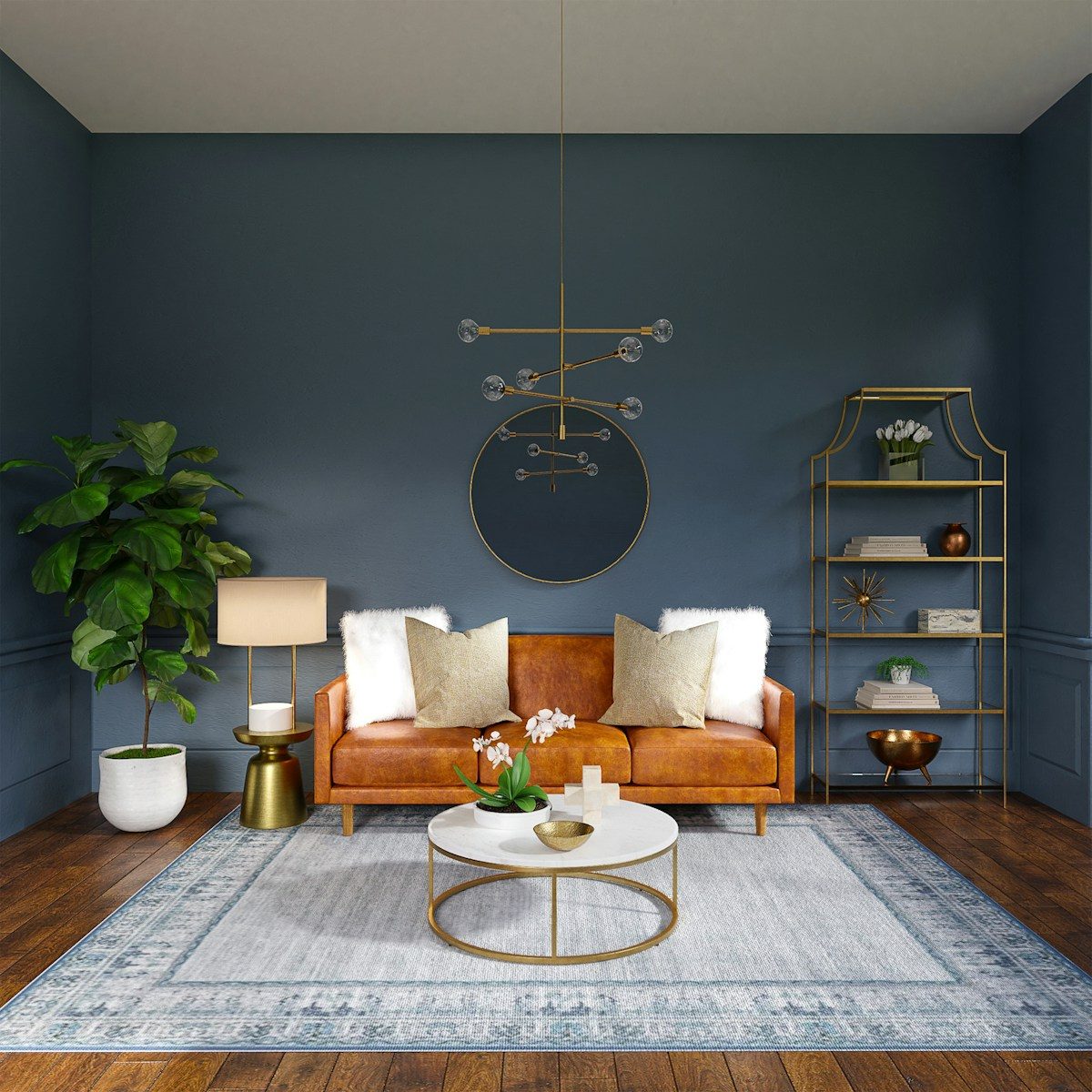
Quick answer: A living room looks tacky when things are the wrong size, too matchy, obviously fake or simply too much. The most common culprits are a rug that is too small, art hung too high, curtains that stop at the window frame, harsh cool-white bulbs and a store-bought matching furniture set. Most fixes cost little: size up the rug, rehang art at 57 inches, raise the curtain rod and switch to 2700K bulbs.
Tacky living room decor rarely comes from one bad purchase. It usually comes from a handful of small decisions that add up: a rug bought because it was on sale, a TV hung wherever the bracket fit, a shelf filled with whatever was in the box. The good news is that the same few mistakes show up in almost every room that looks cheap, and almost all of them can be fixed in a weekend.
This guide lists the 15 living room decor mistakes that most often make a space look tacky, why each one reads as cheap, and the exact fix, with real measurements, so you can stop guessing. There is also a quick self-check table and a budget plan for making your living room look expensive.
What Makes a Living Room Look Tacky?
“Tacky” in decorating means something that looks cheap, careless or trying too hard. It has very little to do with how much you spent. An expensive sofa can still look tacky in the wrong room, and a thrifted one can look high-end. Almost every tacky living room breaks one of three rules:
- Scale: pieces are too small, too big or placed at the wrong height for the room, so nothing looks intentional.
- Cohesion: either everything matches perfectly, like a showroom set, or nothing relates at all.
- Authenticity: materials pretend to be something they are not, such as shiny polyester posing as silk or plastic plants posing as real ones.
Keep those three rules in mind as you read the list below. Most of the fixes come down to getting scale right, adding variety without chaos, and choosing honest materials.
15 Tacky Living Room Decor Mistakes (and How to Fix Them)
1. A rug that is too small
A small rug floating in the middle of the room is the single most common reason a living room looks cheap. It makes the furniture look like it is drifting and shrinks the whole space.
The fix: buy a rug big enough for at least the front legs of the sofa and chairs to sit on it. An 8 × 10 ft rug fits most standard living rooms with a sofa and two chairs; small rooms can use a 6 × 9 or 5 × 8. Aim for the rug to extend at least 12 inches past each side of the sofa and leave about 18 inches of bare floor around the edge (8 inches in a small room), according to Bed Bath & Beyond’s rug placement guide. Tape the outline on the floor before you buy.
2. Art hung too high
Art that floats near the ceiling looks disconnected from the room and makes walls look bare. It is one of the easiest giveaways of an unstyled space.
The fix: hang art so its center sits about 57 inches from the floor, which is roughly average eye level and a common gallery standard. Over a sofa or console, leave 6 to 8 inches between the top of the furniture and the bottom of the frame (Bob Vila). As a rule of thumb, art over a sofa should be about two-thirds of the sofa’s width; one tiny print over a long sofa looks lost.
3. Curtains that stop at the window frame
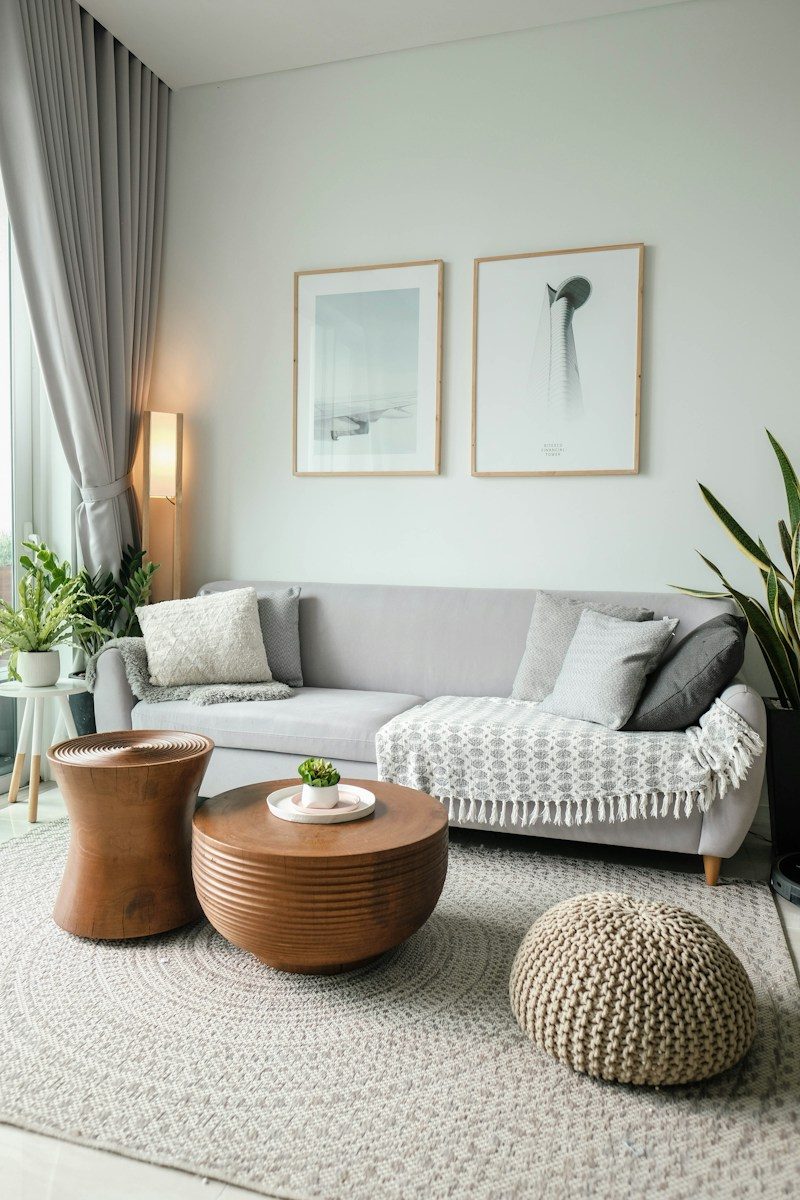
Short curtains mounted right on the frame make ceilings look lower and windows look smaller. “High-water” panels that end above the floor look like they shrank in the wash.
The fix: mount the rod 4 to 6 inches above the frame, or about halfway between the frame and the ceiling, and extend it a few inches past each side so open panels don’t cover the glass (Bob Vila). Panels should just touch the floor. Light, airy fabric helps too: see our sheer curtain ideas for the living room.
4. Cold, blue-white bulbs and one ceiling light
A single overhead fixture with bright, bluish bulbs makes a living room feel like an office or a waiting room, and it flattens every color and texture.
The fix: use warm bulbs. Lighting maker Feit Electric recommends 2700K to 3000K for living rooms; 4000K and 5000K are cool white and daylight, better suited to garages and workspaces. Keep every bulb in the room the same color temperature, and layer at least three sources: overhead or ceiling light, lamps at seating height, and an accent such as a picture light or LED strip.
5. The matching furniture set
Buying the sofa, loveseat, armchair, coffee table and side tables as one set is quick, but the result looks like a showroom, not a home. It is the “matchy-matchy” look designers most often call tacky.
The fix: keep the sofa and add pieces that relate rather than match. Swap one chair for a different shape or fabric, choose side tables in a different wood or metal, and repeat each material at least twice around the room so the mix looks deliberate.
6. Every piece pushed against the walls
Lining furniture along the walls leaves a dead zone in the middle of the room and makes conversation awkward. It looks like you are waiting for a dance floor.
The fix: pull seating in so it faces inward around the coffee table, even if that means the sofa back faces the door. Leave walkways of roughly 30 to 36 inches. If you love the idea of truly sociable seating, our conversation pit guide takes it to the extreme.
7. A coffee table that is the wrong size
A tiny coffee table in front of a big sofa, or one so large you can’t walk around it, throws off the whole arrangement.
The fix: make the coffee table about two-thirds the length of the sofa, keep the top 1 to 2 inches below the seat cushions, and leave 12 to 18 inches between table and sofa (Bob Vila). An 84-inch sofa pairs with a table of roughly 56 inches.
8. Fake-looking plants and flowers
Dusty plastic flowers and shiny faux greenery are among the fastest ways to make a room look dated. Fake is not the problem; obviously fake is.
The fix: choose fewer, better faux plants with matte leaves and realistic stems, put them in real pots, and dust them regularly. Our guide to decorating with artificial hanging plants shows how to make them look natural. Or go real: these pet-safe houseplants are easy to keep alive.
9. Shiny, synthetic fabrics and too many pillows
High-sheen polyester, sequins and a wall of ten throw pillows read as cheap rather than cozy. The shine is what gives synthetic fabric away.
The fix: choose matte, textured fabrics such as cotton, linen, wool or boucle. On a standard sofa, two to four pillows is plenty; mix one pattern, one texture and one solid in colors from the rest of the room.
10. Slogan signs and word art
“Live, Laugh, Love”, “Gather” and other mass-produced word signs are now shorthand for generic decor. They tell guests what to feel instead of letting the room do it.
The fix: replace them with something personal: framed family photos in matching frames, a print from a trip, a vintage map or a child’s drawing in a good frame. If a quote really matters to you, make it a single framed print rather than a carved sign.
11. Clutter and too many small knick-knacks
Dozens of small ornaments spread across every surface make a room look busy and cheap, and they are a pain to dust. Unedited maximalism is still clutter.
The fix: edit hard, then group what is left. Arrange objects in odd numbers (threes work well), vary their heights, and leave some empty space on every shelf. Fewer, larger pieces almost always look more expensive than many small ones.
12. Going all-in on one trend
Farmhouse shiplap on every wall, an all-gray everything room, or every corner in the same viral look dates a living room fast. When the trend fades, the whole room looks tired at once.
The fix: use trends in things that are easy to change, such as pillows, a lamp or a print, and keep large pieces classic. Mixing in one or two older or vintage pieces makes a room look collected over time rather than bought in one weekend.
13. The TV as a shrine, with cords on show
A huge TV hung high above the fireplace, surrounded by a nest of visible cables, dominates the room and strains your neck.
The fix: hang the TV so the center of the screen is close to eye level when you are seated, hide cables in a cord cover or in-wall kit, and balance the screen with art, shelves or plants. A frame-style TV or a gallery wall around it helps it blend in.
14. An accent wall used as a shortcut
One random bright wall, usually behind the TV or on the wall nobody looks at, rarely ties the room together. It often looks like the paint ran out.
The fix: if you want color, commit: paint the whole room, try a color-drenched look including the trim, or use a feature wall that has a reason to stand out, such as the wall behind the sofa or around the fireplace. Our living room wallpaper ideas and colorful living room guide show how to do it well.
15. Finishes that clash or pretend
Plastic “wood” with a repeating grain, faux marble that is obviously printed and random clashing metals make a room look cheap even when each piece seemed fine on its own.
The fix: choose honest materials where you touch them most: real wood, stone, ceramic, glass, metal. Mixing metals is fine if you do it on purpose: pick one dominant finish and one accent, and repeat each at least twice so it looks planned.
Quick Self-Check: Is Your Living Room Tacky?
Use this table as a quick audit. If you tick three or more, start with the cheapest fixes first.
| Sign | Why it looks cheap | Quick fix | Typical cost |
|---|---|---|---|
| Sofa legs are off the rug | Furniture looks like it is floating | Size up to 8 × 10 ft (or layer a larger jute rug under) | $$ |
| Art center is above 60 in | Walls look bare and disconnected | Rehang at 57 in to center | Free |
| Curtain rod sits on the frame | Ceilings look low, windows small | Raise the rod 4–6 in, use floor-length panels | $ |
| Bulbs look blue or white | Room feels clinical | Switch to 2700K–3000K bulbs | $ |
| Only one ceiling light | Flat, harsh light | Add two lamps and one accent light | $$ |
| Everything came as a set | Looks like a showroom | Swap one chair or the side tables | $$ |
| Plastic flowers or shiny faux plants | Obviously fake | Fewer, better faux stems or real plants | $ |
| Shelves full of small ornaments | Busy and cluttered | Edit, then group in threes | Free |
| Visible TV cables | Looks unfinished | Cord cover or in-wall kit | $ |
How to Make a Living Room Look Expensive on a Budget
You don’t need to replace everything. Work through these steps in order; the first four cost little and make the biggest difference.
- Declutter first. Clear every surface, then bring back only what you love. Empty space is free and looks expensive.
- Fix the light. Swap every bulb to 2700K–3000K and add at least two lamps at different heights.
- Rehang curtains and art. Raise the curtain rod, use floor-length panels and rehang art at 57 inches to center.
- Size up the rug. The right-size rug makes existing furniture look intentional.
- Upgrade what you touch. Replace shiny cushion covers with linen or wool, and swap cheap knobs or lamp shades.
- Add one real statement. A large plant, a big piece of art or one vintage find gives the room a focal point.
- Repeat colors and materials. Use each color or finish at least twice so the room looks planned.
Want a stronger architectural statement? A sunken living room or a calm Japanese-style living room shows how much impact a clear concept has.
Frequently Asked Questions
What makes a living room look tacky?
A living room usually looks tacky when the scale is wrong (small rugs, high art, short curtains), everything matches like a showroom set, or materials look fake, such as shiny polyester and plastic plants. Harsh cool-white lighting and clutter make all of these worse.
Can a living room look tacky even with expensive furniture?
Yes. Price doesn’t prevent tacky decor. Expensive pieces still look cheap if the rug is too small, the art is hung too high, the lighting is harsh or the room is crowded. Placement and proportion matter more than price.
Is it tacky to mix gold and silver in a living room?
No, mixing metals is fine when it looks deliberate. Choose one dominant metal and one accent, and repeat each at least twice in the room, for example brass lamps and frames with black or silver hardware.
Is it tacky to put a rug on carpet?
Not if it is done well. A rug on wall-to-wall carpet can define the seating area and add color. Choose a low-pile or flat-woven rug, size it so at least the front legs of the furniture sit on it, and use a rug gripper made for carpet so it doesn’t wrinkle.
Are matching furniture sets tacky?
Matching sets aren’t wrong, but a full set of identical sofa, loveseat and chair tends to look like a showroom. Keep the main piece and mix in one or two chairs or tables in a different shape, color or material.
Is a gray living room outdated?
An all-gray room, with gray walls, floors, sofa and decor, now looks dated to many people. Gray still works as a neutral when you warm it up with wood, warm white walls, texture and 2700K lighting.
What color light bulb is best for a living room?
Warm white bulbs between 2700K and 3000K are best for living rooms. Cooler 4000K to 5000K bulbs feel clinical in a living space. Use the same color temperature for every bulb in the room.
More Living Room Guides
- Conversation pit: history, design ideas and cost
- Sunken living room design ideas
- Sheer curtain ideas for the living room
- Trendy living room wallpaper ideas
- How to design a colorful living room
- Houseplants that are safe for cats
The Bottom Line
Tacky living room decor is almost always a scale, cohesion or authenticity problem, not a budget problem. Start with the free and cheap fixes: declutter, switch to warm 2700K–3000K bulbs, rehang art at 57 inches and raise your curtains. Then size up the rug and break up any matching set. Do those few things and your living room will look calmer, more personal and far more expensive than what you spent.
Sources: Bed Bath & Beyond rug size guide; Bob Vila: how high to hang pictures; Bob Vila: how high to hang curtains; Bob Vila: coffee table height; Feit Electric color temperature guide. Measurements are general guidelines; adjust them to your room, ceiling height and furniture.